Care, organized around one patient.
Beside
01 research No map for the journey
Treatment usually means surgery, radiation, or chemotherapy, and often more than one. It can change how a person eats, speaks, and breathes.
No central place to start
Information online is scattered. There is no centralized place to begin looking after yourself.
What happens next?
Patients left visits unsure of the next step. The plan stayed with the care team.
Questions spike between visits
A new symptom at night turned into a search online. There was nowhere trusted to ask.
Fear makes people avoid
Long explanations in clinical words got put off, then avoided.
What they said
Pulled from the four empathy maps. People are named by role only.
“The next step was never written down.”Caregiver
“My patients are learning a new language.”Oncology social worker
“After visits I forgot what was said.”Breast cancer survivor
“The patients who do best have a strong support system around them.”Social worker, Dr. Day's program
The research, on paper
Scroll sideways or use the arrows. Names on the boards are masked. Select a board to enlarge it.
Finding to screen
Each finding and the screen it reached.
Unclear next steps
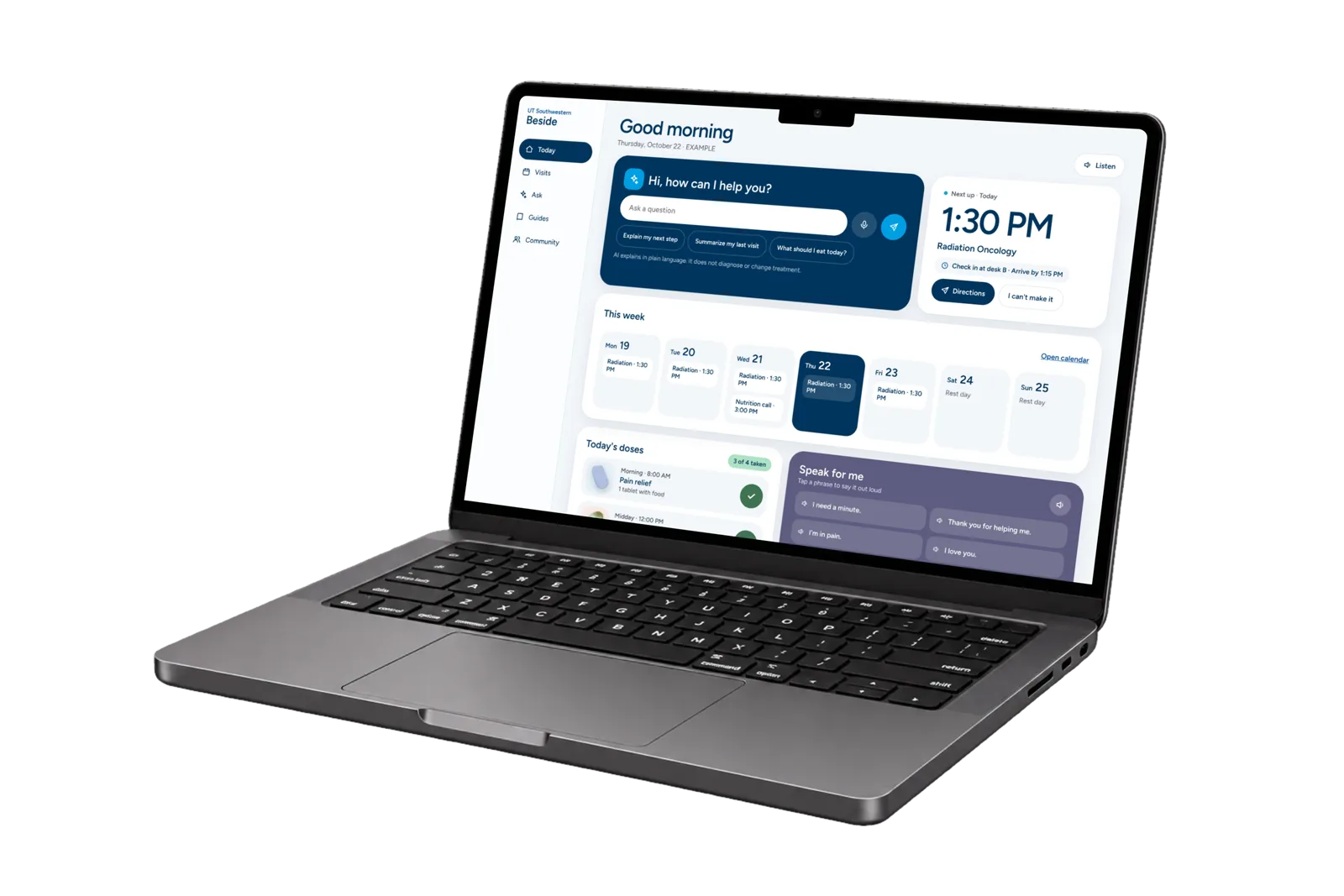
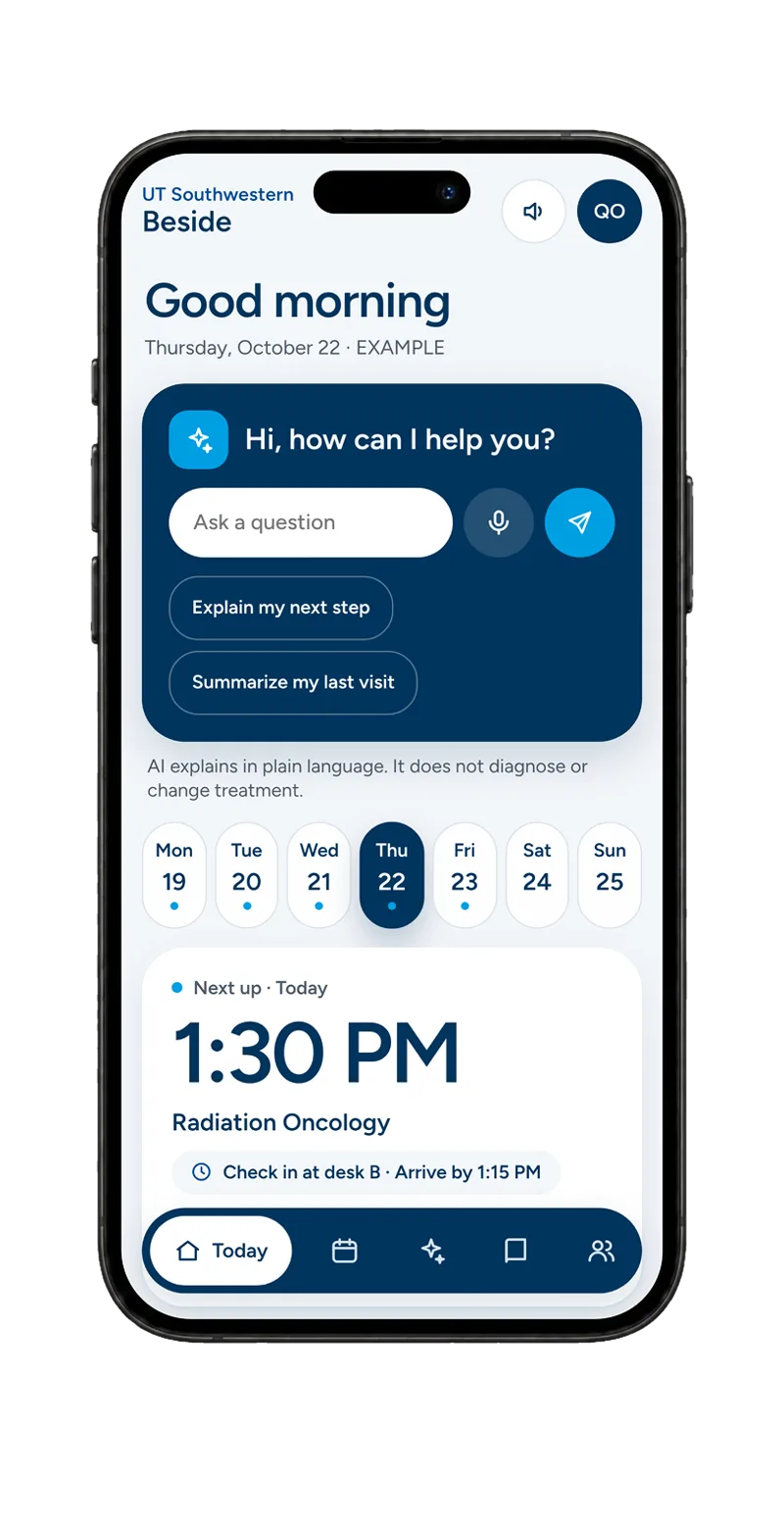
A next-step strip on Home, and a First Days module.
Symptoms at home
When To Worry, in three levels, and a Visit Day mode.
The caregiver joins the care team
Caregiver dashboards and a caregiver track.
Peers reassure
Community as a main section, with anonymous peer matching by scenario tags.
02 pivot Another dashboard is not the answer on its own
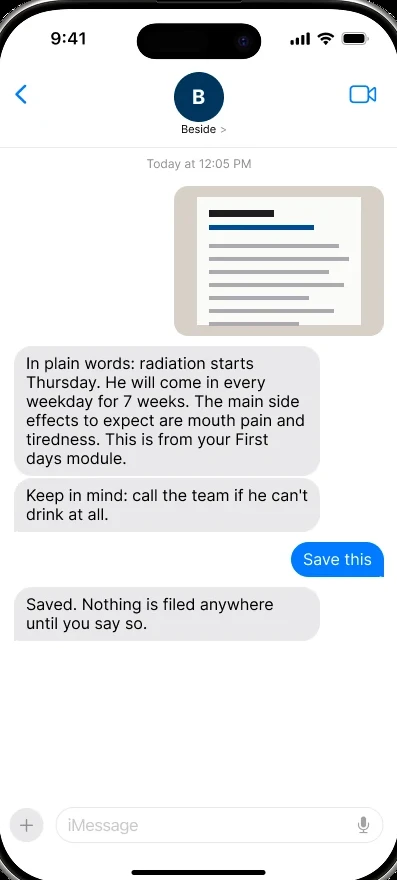
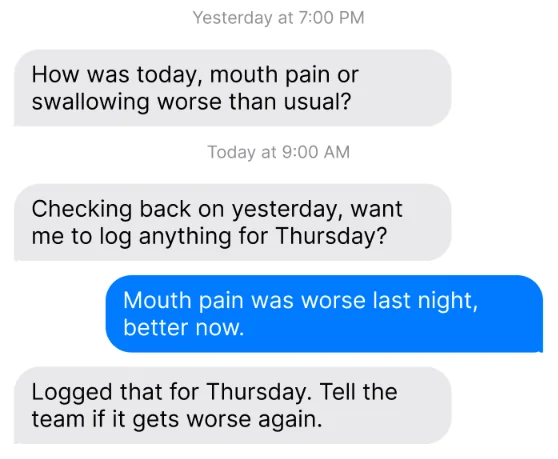
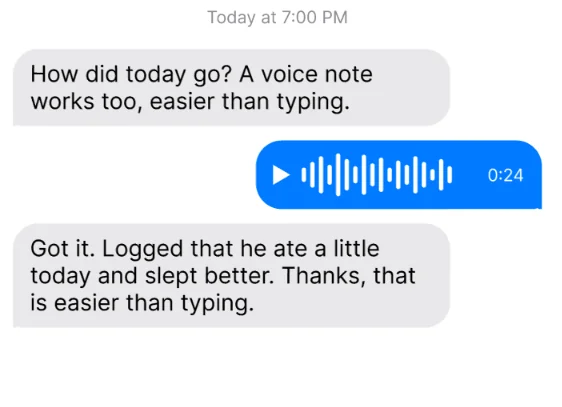
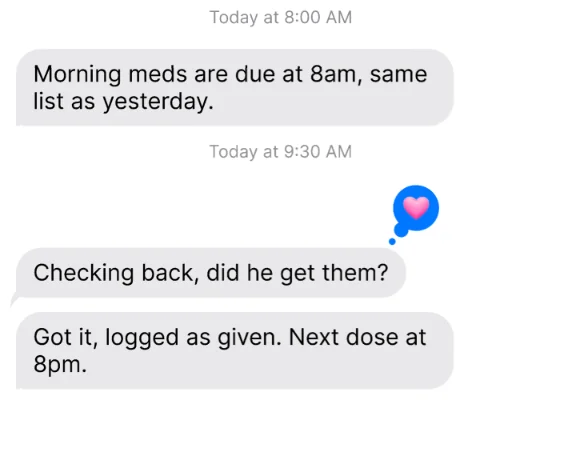
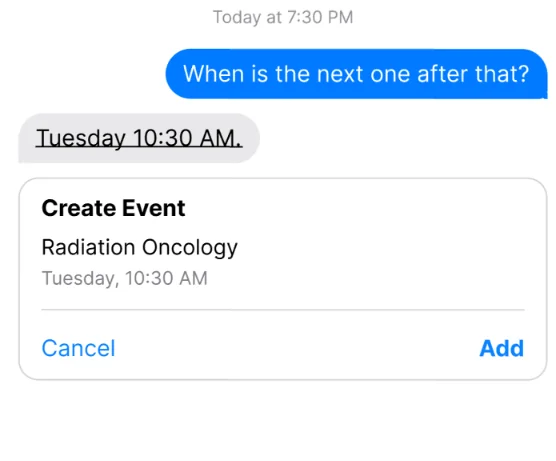
We started with a dashboard. But questions spike between visits, away from any app, so we pivoted to an SMS companion that works in the text thread caregivers already use.
Earlier versions
Both early passes put the next step first. The current home kept that.


Beside, in a text thread
Caregivers who will not open another app can still get the same modules by text.
Next project
Grove